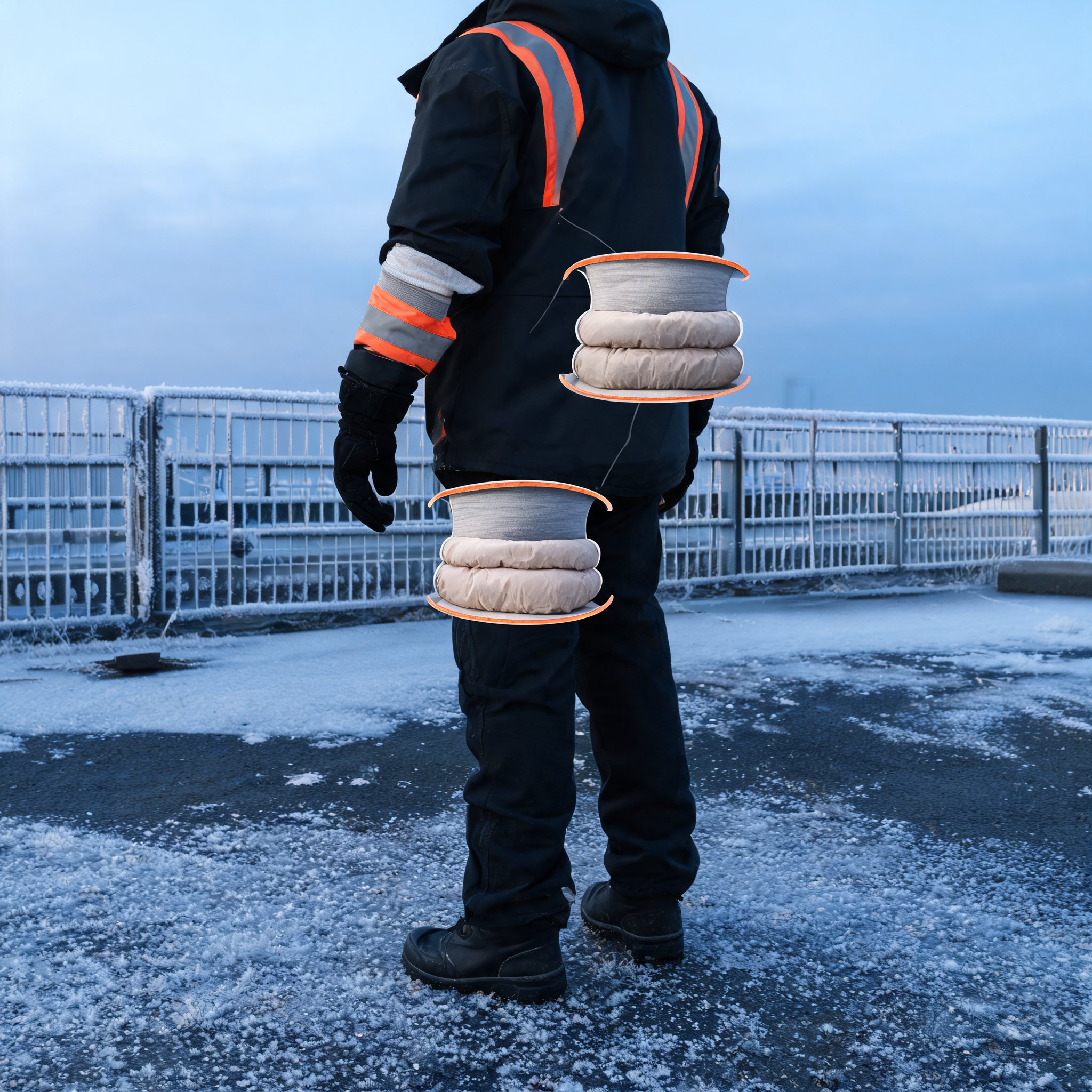
Outdoor work in winter can raise risks for employees when personal protective equipment is incorrectly selected or combined, according to CWS Workwear International GmbH. The Dreieich-based company has identified five typical protection gaps in a current guide.
The guide notes that shorter days, wet conditions and frost change the hazard profile at many outdoor workplaces, yet PPE is often not adjusted to match. The main problem, according to CWS Workwear, arises from the interaction between clothing layers: individual items may be certified, but the combination actually worn may not meet the requirements of the relevant standards.
Why layering matters
This distinction shifts attention from single garments to the complete system worn by the worker. A jacket, mid-layer, gloves or footwear can each carry certification and still leave a protection gap at the interfaces or in the overall ensemble. CWS Workwear's guidance therefore focuses on how winter PPE components work together rather than on individual pieces alone.
The company's five-gap framework is presented as practical guidance for employers and users reviewing cold-weather outdoor work. The source text does not detail each of the five gaps; it emphasizes that the combination worn in practice must satisfy the applicable norms.
For employers, the point is to review the assembled PPE set, not only the label on one item. When conditions change, the combination may need to be reassessed so that the protection actually worn matches the winter task.