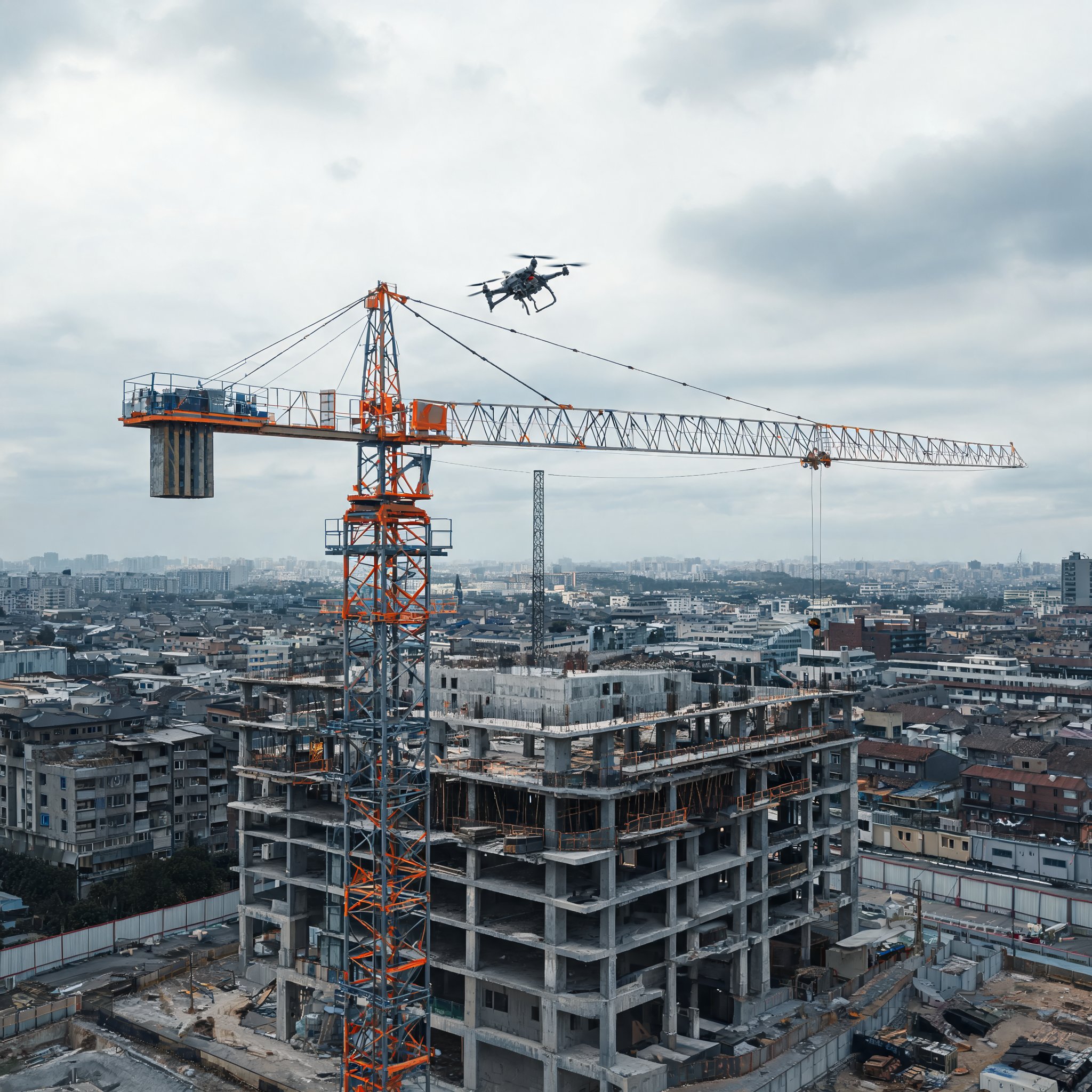
A drone carrying out an aerial survey struck the top of a tower crane at a construction site in the Cheetham Hill area of Manchester in August, according to a bulletin from the Air Accidents Investigation Branch. The unmanned aircraft fell 120 metres to the ground after the collision.
The AAIB said the drone was flying a pre-selected flight path over an urban construction site. Its obstacle avoidance feature was enabled at the time, but the aircraft still hit the crane and fell. The bulletin did not identify the site or the contractor involved.
The incident was notified to the AAIB, but no formal investigation was launched. The bulletin provides an account of the flight and its immediate outcome without setting out a full inquiry into the causes.
An internal investigation by the construction company found that the company and its remote pilots may not have fully understood the limitations of the obstacle avoidance software, according to the bulletin. The wording stops short of finding that the system failed or that pilot error caused the collision.
What the account shows
The case centres on a system intended to help prevent collisions. Having obstacle avoidance enabled does not, on its own, establish that users understand how the software performs around tall structures or in constrained urban airspace.
The bulletin does not detail the drone's make or model, the software's specific limitations, or the height at which the survey was being flown. It also leaves open what, beyond the possible misunderstanding identified internally, contributed to the collision.
The episode points to the operational risk of drone surveys on active construction sites, where cranes and other tall equipment create obstacles within the flight path. For contractors, the internal finding suggests checking that remote pilots understand not only how to switch on avoidance functions but also the conditions in which those functions may not perform as expected.