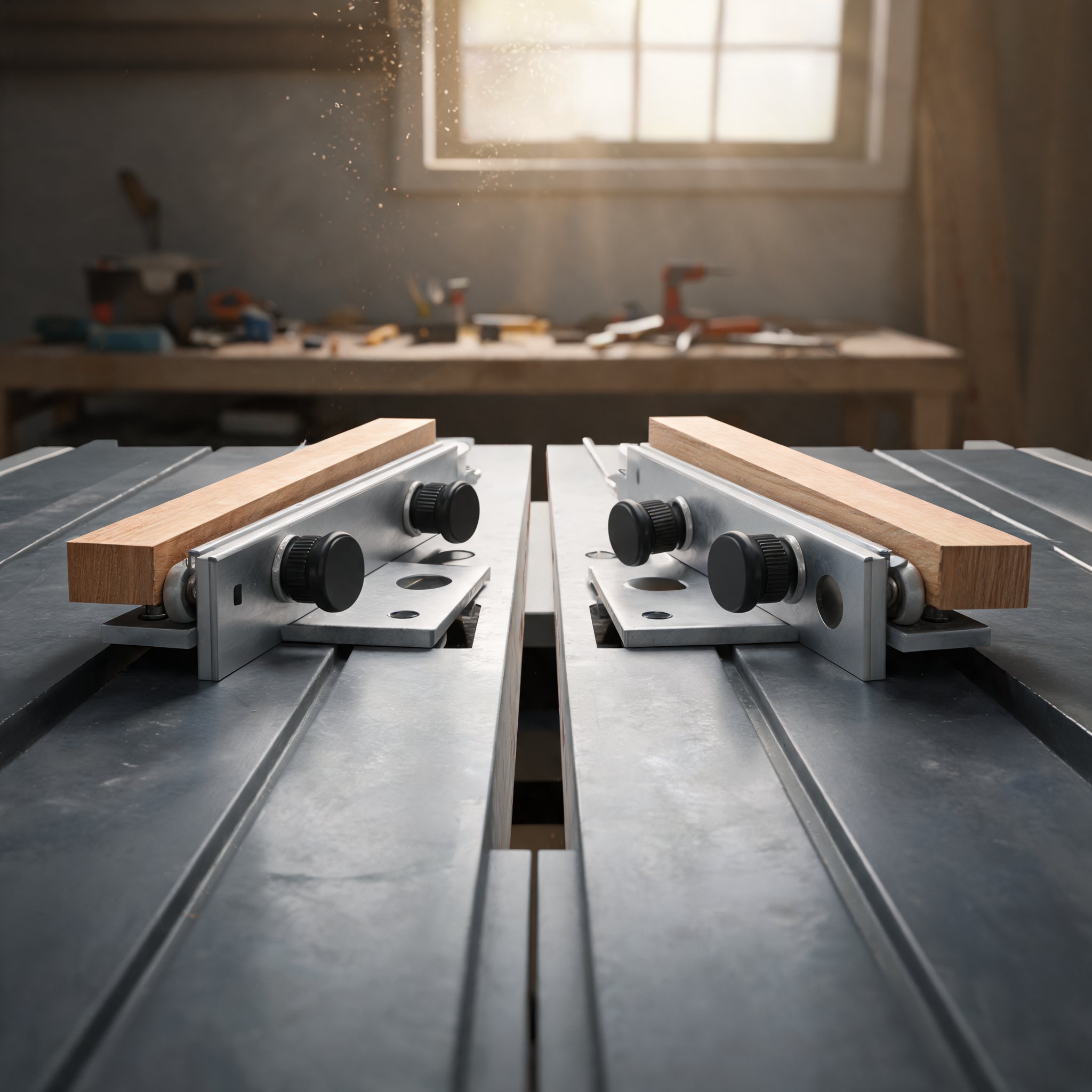
SawStop has apparently launched a set of new table saw accessories, among them WorkTrack workpiece guides built to act like rolling featherboards. The guides are drawing attention less for what they do than for how closely they appear to resemble an established product: JessEm's Clear-Cut table saw guides.
Many people are discussing the similarities between the two designs, and the author of the original report places himself firmly in the camp that sees the SawStop WorkTrack Guides as a copy of the JessEm product.
Why the resemblance stands out
Borrowing between tool brands is hardly unusual, and design inspiration moves in both directions across the industry. What makes this case awkward, the author argues, is SawStop's own history of infringement lawsuits. Even if no infringement exists here, the episode is described as a poor look for the company.
Where each product is made
Manufacturing location adds a further point of contrast. SawStop's table saw work guides are said to be made in China, while JessEm states that its guides are produced in Canada.
Part of a broader shift
The accessory launch arrives as SawStop shows other signs of changing course. The company is shutting down its table saw business in Europe, and its table saws have been listed on sale for Black Friday 2026. Whether these developments are connected, and what is driving them, remains unclear.
The author also notes that it is not clear how long the new accessories have been on the market, since SawStop no longer sends out press releases, and he stopped following the brand on social media after repeated exposure to graphic images of injured hands in its feed.