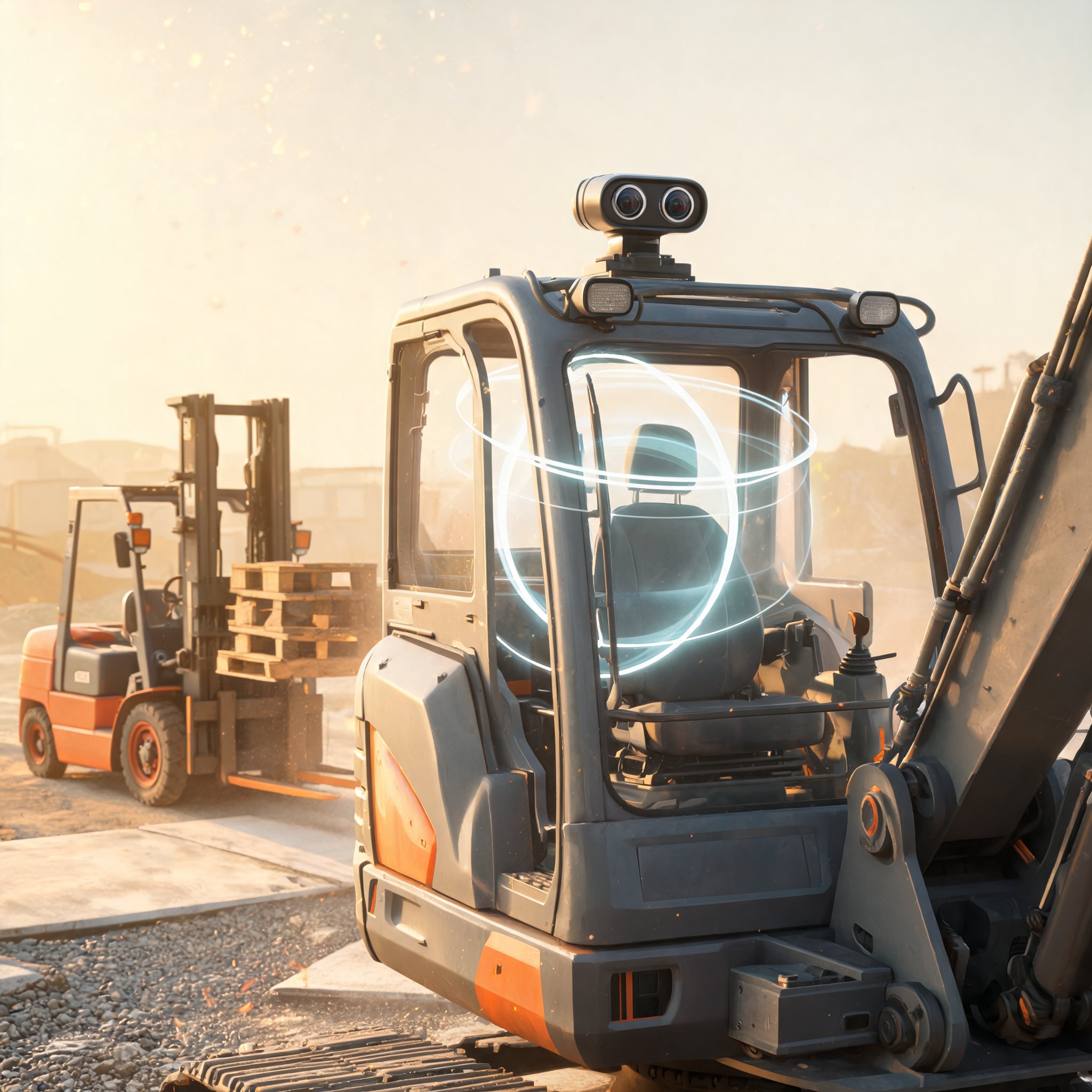
Samsara Inc. has introduced the Samsara 360 Camera, a dual-fisheye, 360-degree AI camera, alongside a Samsara for Equipment offering that extends the safety and visibility tools the company already sells to road fleets into machinery used in construction, warehousing, mining and airport operations.
The target applications are machines with open cabs — excavators, forklifts and pushback tractors — whose operators often work within feet of colleagues and other equipment. According to Samsara, none of that equipment has previously had a camera system built for the job, and the absence of ground-level footage has left incident investigations stalled, liability disputed and the same unsafe behaviours repeated.
David Gal, vice president of product and engineering at Samsara, said frontline workers running forklifts, excavators and ground equipment perform some of the riskiest work in physical operations, on machines with open cabs, no windshield, no roof and hazards on every side. He said the camera was designed to survive those conditions and see all the way around the operator, so customers can protect frontline workers on the warehouse floor, the job site and the ramp in the same way they do on the road.
One mount instead of four cameras
Conventional 360-degree systems for equipment require four cameras, four mounts and a separate recorder, Samsara said. The Samsara 360 Camera captures a full surround view from a single mount point, and managers can pan and zoom through any recorded event to review it from different angles. The unit installs in the same manner as a Samsara dash cam and is built to withstand harsh weather and rough operating conditions, according to the company.
Safety detections and coaching
Footage from the camera feeds Samsara AI, which the company says is built on nearly a decade of development of its AI Dash Cams. In Samsara's description, teams can use the system to:
- See every angle of risk: AI detections flag mobile phone use, camera obstruction, seat and lap belt use and harsh impacts, trained on how equipment is actually operated.
- Understand where risks occur: managers can identify which operators, sites and equipment types show repeat risky behaviour, and every impact automatically routes video to the Samsara Safety Inbox so investigations rest on evidence rather than competing accounts.
- Act before it happens again: managers can coach operators using their own footage, enforce zero-tolerance mobile phone policies and speed up OSHA investigations without adding headcount, while timestamped video can support insurance claims and help establish or clear liability.
Maintenance and mixed-brand visibility
Samsara for Equipment pairs the 360 Camera with equipment monitoring and Samsara agents on the same platform customers use for their road fleets. In the company's description, teams can see how long each forklift or excavator sits idling, schedule preventive maintenance on actual engine hours rather than the calendar, and check how many forklifts genuinely run at peak before buying more units. Samsara agents work with the equipment out of the box, so a fault code can open a work order automatically. Rather than keeping a separate OEM portal for every equipment brand, the company says every vehicle, piece of equipment and operator can be managed on one platform.
Pricing and availability details were not included in the announcement, and the safety and operational benefits described reflect the company's stated capabilities rather than independently verified outcomes.