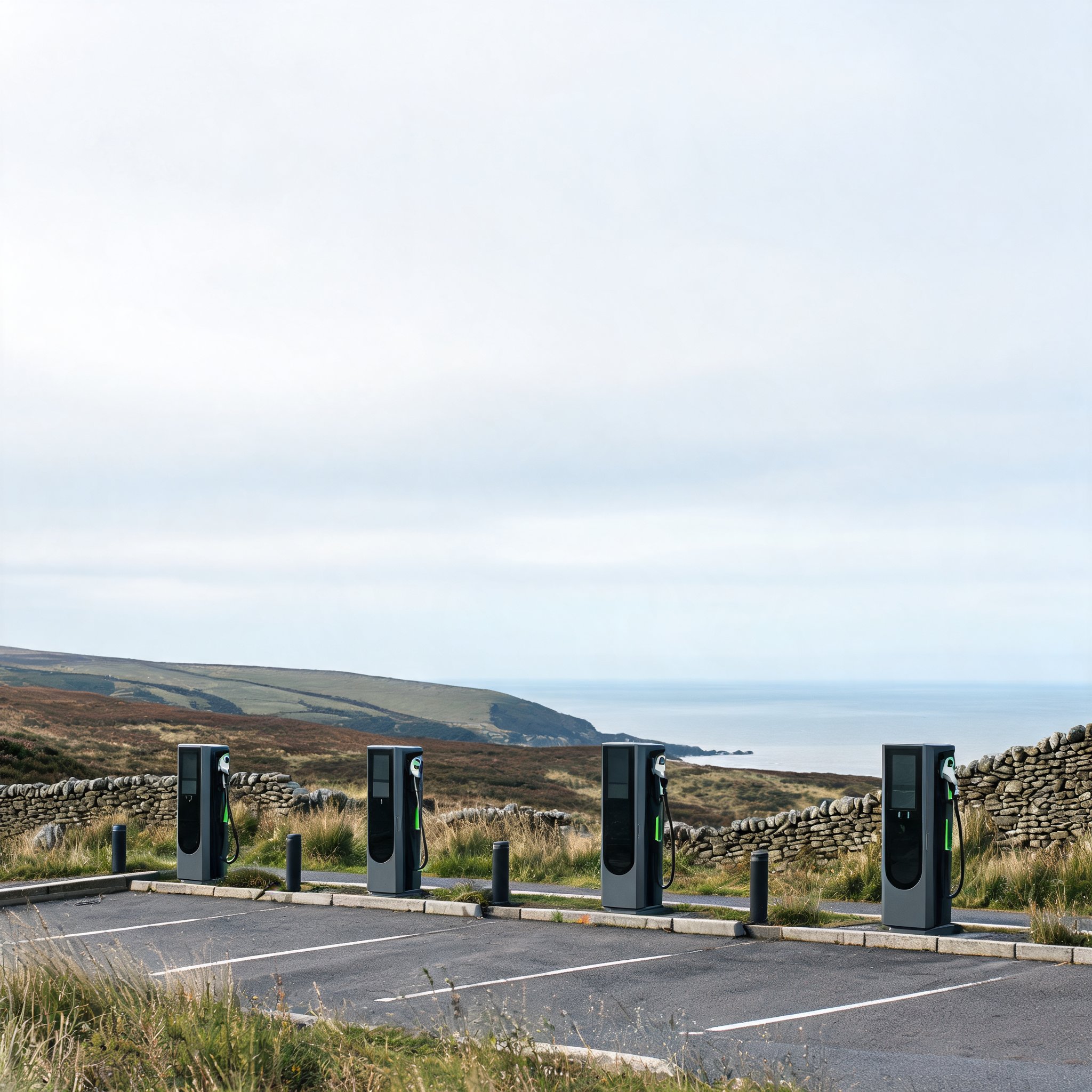
Northumberland County Council has passed a motion to add 36 public electric vehicle charging points at 26 locations, expanding the council’s existing charging network. The county in northeast England borders Scotland and is known for Hadrian’s Wall and Northumberland National Park.
Most of the new infrastructure will be built on council-owned land. Under the plan, 78% of the charge points will be installed there, while the remaining chargers will be placed on land owned by third parties under licensing agreements.
The installation is being financed with just over £1 million in external funding from the City Region Sustainable Transport Settlement. Revenue generated by the chargers will be used to meet their running costs, management and maintenance. The external funding will support the rollout of the charge points until 2029.
An in-house EV team at the council will install and maintain the equipment. Cllr Richard Wearmouth, the cabinet member with responsibility for transport, welcomed the additional investment in EV charging provision. He said the county has one of the largest road networks in the country and that the facilities are needed to help people get around.
The charge-point expansion follows the entry into service of 14 BYD BD11 battery-electric buses in the region a few months ago.