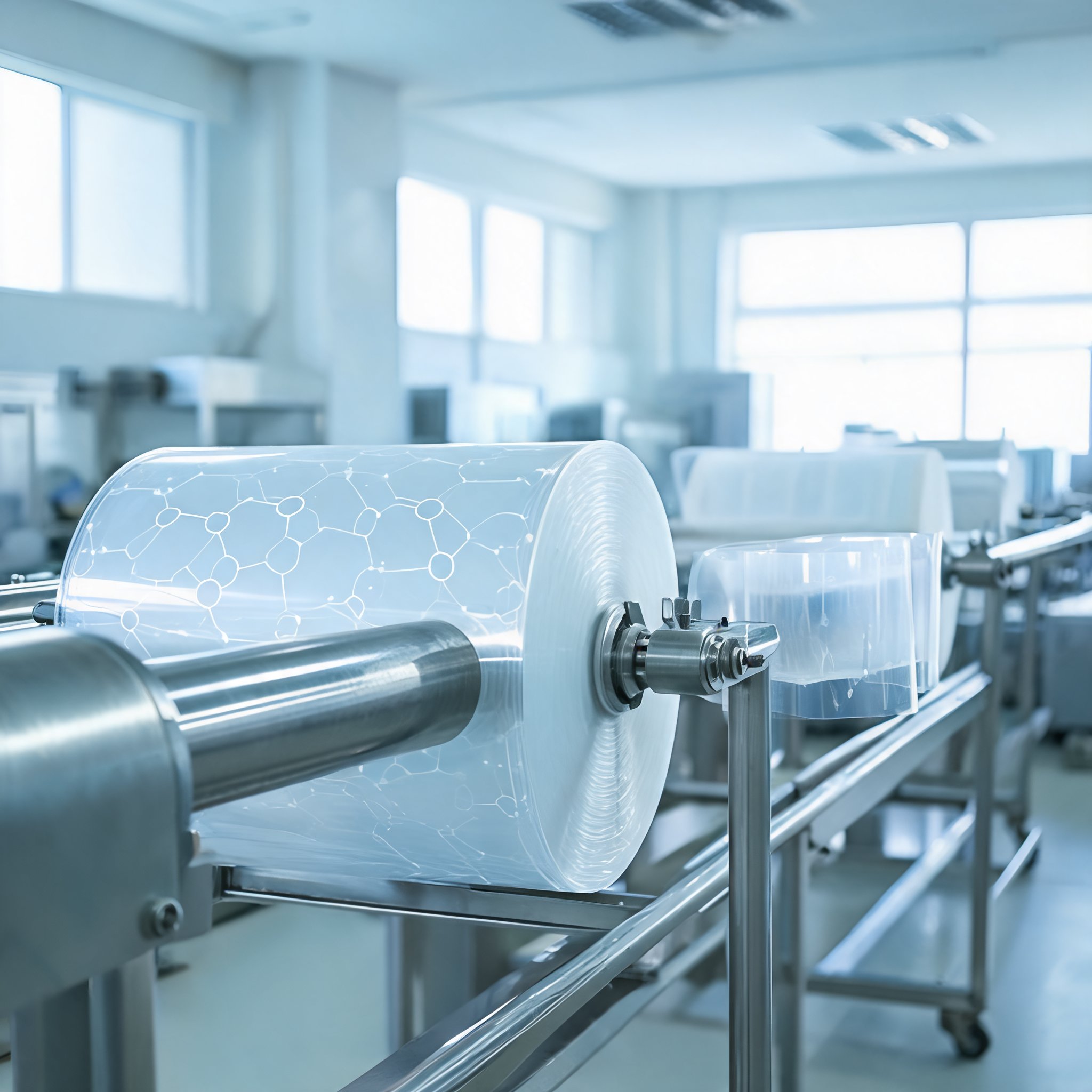
Innovia Films has reached the finalist stage of the 2026 Sustainability Awards with a food-safe recycled polypropylene (rPP) film intended for labels and packaging. The entry is competing in the Driving Circular Economy category and uses post-consumer recyclate in European food-contact applications.
The company describes the film as a world first. It says it played a central role in developing the polymer feedstock needed for the project and in incorporating recycled content into a specialist film for technically demanding uses. According to Innovia, the result offers a new route toward more sustainable polymer lifecycles rather than a single-product fix.
Food-contact compliance and traceability
Innovia says the film is among the first commercially available materials to combine recycled polypropylene content with an EU food application Declaration of Compliance under Regulation (EU) 2022/1616, using the Annex III and Novel Technology route. On that basis, the company says the material can be used by any brand. It also stresses that the supply and processing of the recycled polypropylene into film are transparent and traceable.
The company presents the launch as evidence that EU food-safe mechanically recycled polypropylene film is now a practical reality, and as a route that others in the industry can follow. It does not claim the material solves every sustainability challenge; instead, it frames the film as one pillar of a broader transition.
Development work in Cumbria
The technical programme was carried out at Innovia’s research, development and manufacturing site in Wigton, Cumbria. Workstreams included laboratory analysis, pilot processing, film formulation, production trials and optimisation of the company’s “double bubble” manufacturing process. These activities ran alongside polymer development and fed information back into that work, according to Innovia.
Innovia attributes part of the entry’s appeal to the speed of development. It says few in the industry expected EU food-safe mechanically recycled polypropylene films to become available so soon. The company also notes that producing high-performance film from fully specified virgin material is already challenging, making the project’s untested objectives technically demanding.
Mechanical and chemical recycling routes
Innovia already produces EU food-safe recycled polypropylene film using polymers from chemical recycling. The new development extends that offer to mechanical recycling. The company says the mechanical route is efficient and requires less energy, giving film leaving its factory an improved carbon footprint. That is a company claim; no independent lifecycle figures are provided.
Customer trials and regulatory pressure
Industry response has been strong, according to Innovia. Technical service staff are coordinating customer trials across a range of applications, and the company says it continues to receive enquiries for additional film types. It interprets this interest as evidence that brands are pressing ahead with circular economy and sustainability programmes.
The company links the timing to the forthcoming Packaging and Packaging Waste Regulation (PPWR). It argues that its EU food-contact-safe, mechanically recycled rPP film addresses a crucial industry need, allowing partners to increase recycled content across supply chains while reducing environmental impact and lowering carbon footprint. The launch product is now being followed by an expanding film range.
The Sustainability Awards winners are announced at the Sustainable Packaging Summit. The next summit is scheduled for 30 November to 2 December 2027 at the RAI Amsterdam.