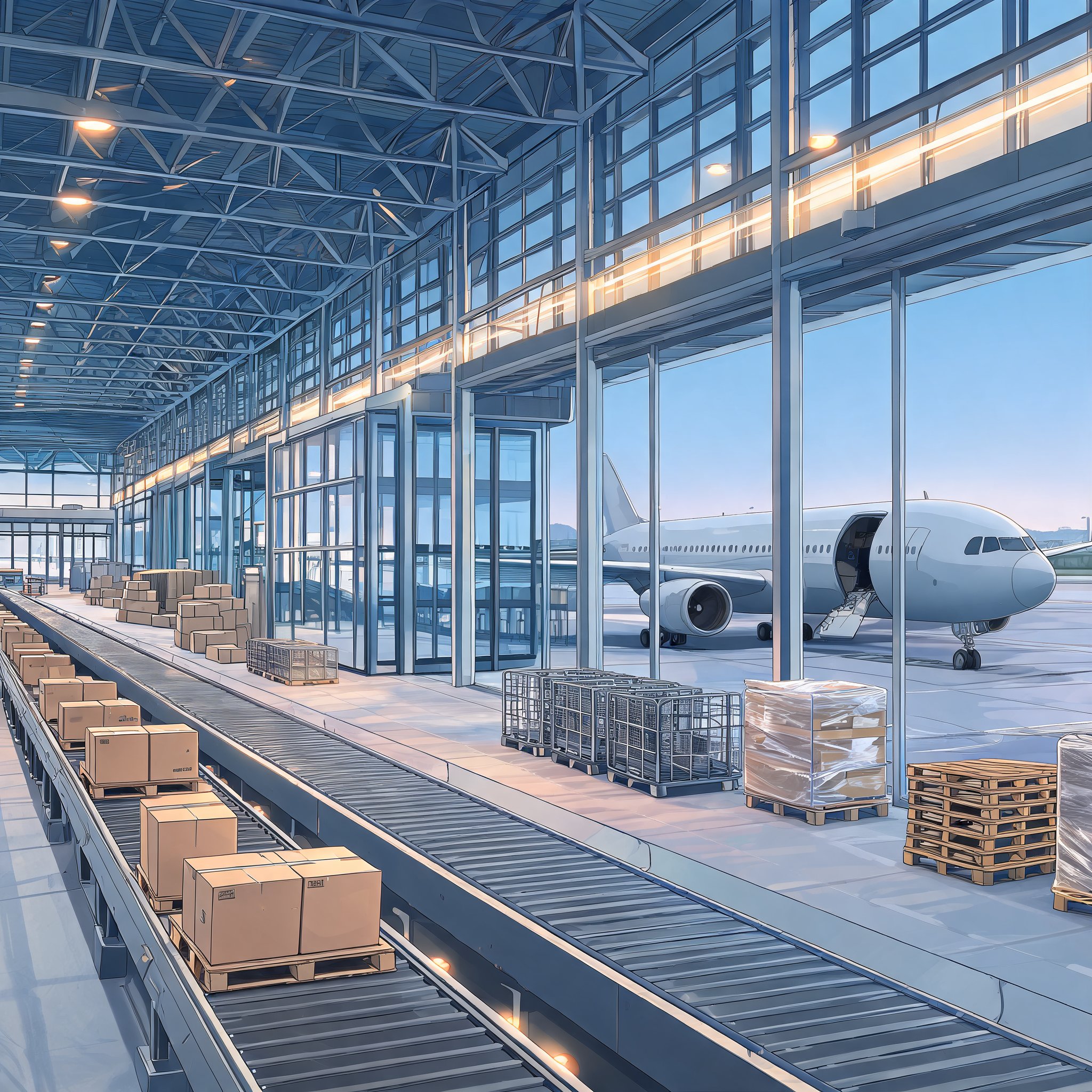
FedEx has opened a new international air cargo terminal at Guangzhou Baiyun International Airport, a facility the company says more than triples its sorting throughput in southern China and deepens its position in one of the world's largest trading regions.
The FedEx Guangzhou Baiyun Airport International Cargo Terminal 4 was developed in collaboration with the Guangdong Airport Authority. The complex covers roughly 45,000 square metres (484,375 square feet) and brings warehousing, sorting operations and customs supervision together within a single air cargo building. It is designed to handle both express parcels and freight shipments, extending the operator's connectivity between South China and international markets.
Capacity is the headline claim. At peak, the terminal's intelligent sorting system can process up to 28,000 shipments an hour — more than three times the previous processing capability — while annual cargo handling capacity at the site exceeds 100,000 metric tons.
The location reflects the scale of regional trade. In the first three quarters of 2026, the nine mainland cities of the Guangdong-Hong Kong-Macao Greater Bay Area recorded imports and exports of US$1.26 trillion (about £960 billion), accounting for 21% of China's total trade, according to figures cited in the announcement.
Salil Chari, president of FedEx Asia Pacific, said the future of trade depends on reliable connectivity, resilient supply chains and access to global markets. He described the Greater Bay Area as one of the most dynamic economic regions in the world and said the investment reinforces the company's commitment to helping businesses in China and across Asia-Pacific grow internationally. By strengthening connectivity and integrating the terminal into FedEx's global network, he said, customers should be able to move goods more efficiently and reach new markets.
For shippers, the practical proposition is speed and headroom: more sortation capacity, faster processing and customs oversight inside the same building, which the company links to expanded cross-border trade capability. Those are operator statements about what the facility is built to do rather than verified outcomes. The announcement did not disclose throughput, transit-time or volume results from the terminal's initial operation, the number of staff at the site, or which specific trade lanes it will serve.
With annual handling capacity above 100,000 metric tons and a sorting floor rated at 28,000 shipments an hour at peak, the terminal is sized for volume growth rather than current demand alone. How far that capacity translates into shorter transit times for exporters in Guangdong will depend on how the facility is used within FedEx's wider Asia-Pacific and intercontinental network.