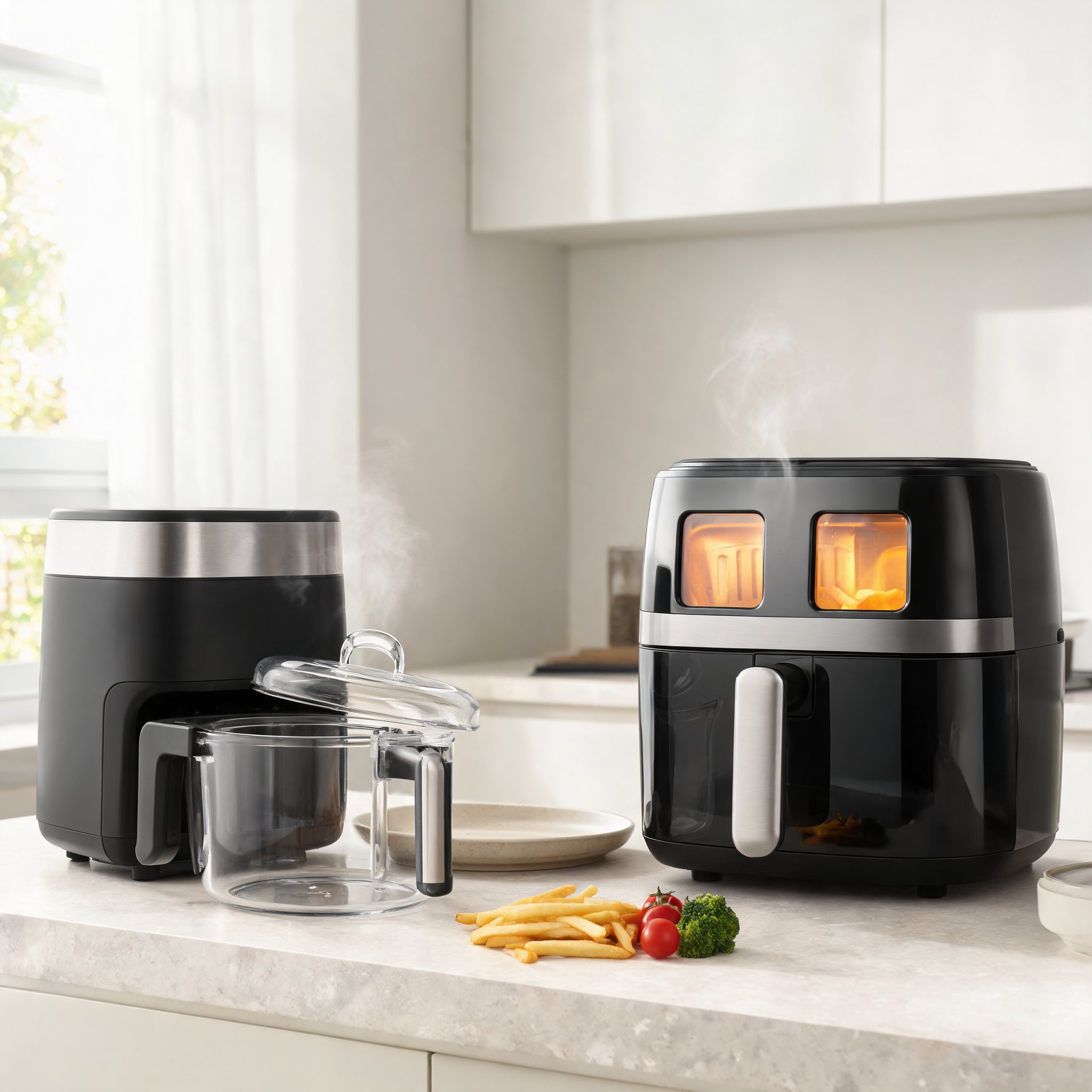
Cuisinart has launched two ClearView glass air fryers: the compact 3.8L Glass Air Fryer and the family-sized ClearView 9-in-1 8.5L Air Fryer. The models are designed around visible cooking chambers, with two viewing windows and interior lights so users can follow their food's progress without opening the drawer.
The 3.8L model cooks in a glass bowl, which comes with a lid for storing leftovers. Both air fryers use removable, PFAS-free ceramic-coated crisper plates, while the 8.5L model also has a PFAS-free ceramic-coated basket. Cuisinart lists the parts as dishwasher-safe for easier clean-up.
Both units are rated at 1,800W and reach temperatures of up to 230°C. Each is backed by a three-year warranty. The 3.8L model offers Air Fry, Roast, Grill, Bake, Keep Warm and Recrisp functions, and users can save a favourite recipe. The 8.5L model adds Air Fry, Roast, Grill, Max Crisp and Dehydrate settings, plus precise 5°C temperature adjustments and recipe saving.
Laura Conlon, Cuisinart's head of marketing, said air fryers are a staple in Australian kitchens and that shoppers are now looking beyond size and speed to the materials their food is cooked in. She said the ClearView range gives shoppers a reason to take a fresh look at the category, with two sizes to suit different households.
The range is positioned for quick meals, sides and snacks, reflecting the uses that have made air frying popular. The 3.8L model is the more compact option, while the 8.5L unit is described as family-sized and adds dehydration and maximum-crisp functions.
The Cuisinart ClearView 3.8L Glass Air Fryer is priced at RRP $199, and the ClearView 9-in-1 8.5L Air Fryer at RRP $229. Both are available through appliance, kitchenware and specialist retail partners, as well as directly from Cuisinart.