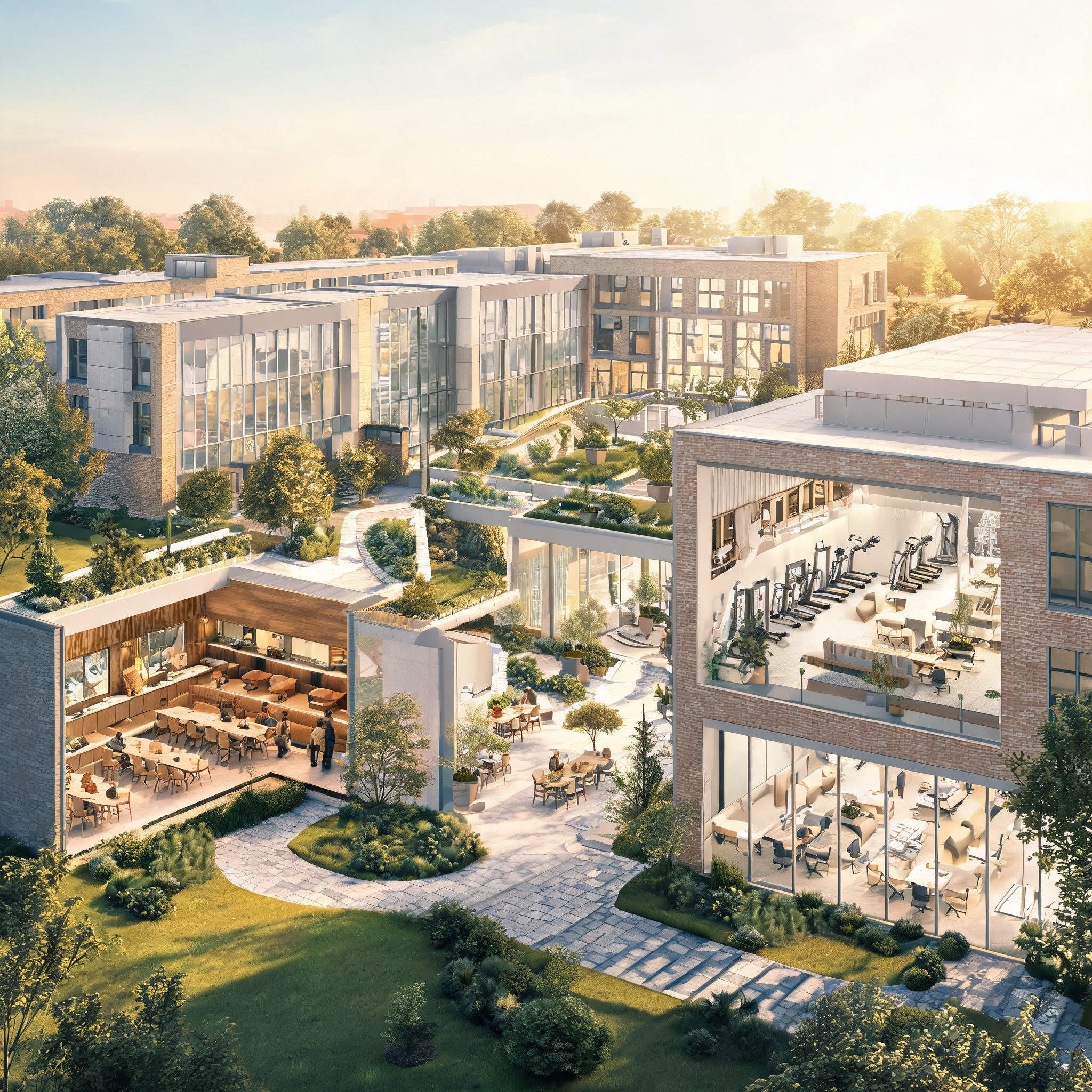
Clark Associates hosted an open house in late October to celebrate its newest office building at 2257 Old Philadelphia Pike in Lancaster, Pennsylvania. The 48,000-square-foot building opened in June and expands the company’s corporate campus on Old Philadelphia Pike.
Named features include a Research and Development Center, an employee cafe called The Grove, a gym, a courtyard, and offices and collaborative areas. Several Clark teams work from the building, among them merchants, procurement operations and R&D Center employees.
The open house drew more than 130 people, according to the company. Employees, senior leadership and business partners attended, as did guests from Lancaster Mennonite School, which sold the building to Clark in 2021.
The building brings several workplace functions into one location on the campus: research and development space, a cafe for employees, fitness facilities, a courtyard, and office and collaborative work areas. Its opening adds 48,000 square feet to Clark’s corporate footprint in Lancaster.
Clark is headquartered in Lancaster and employs more than 7,900 people. The building is the newest office addition to the campus, and the October gathering followed its June opening and celebrated the completed facility.
The new building is part of the company’s existing campus along Old Philadelphia Pike.